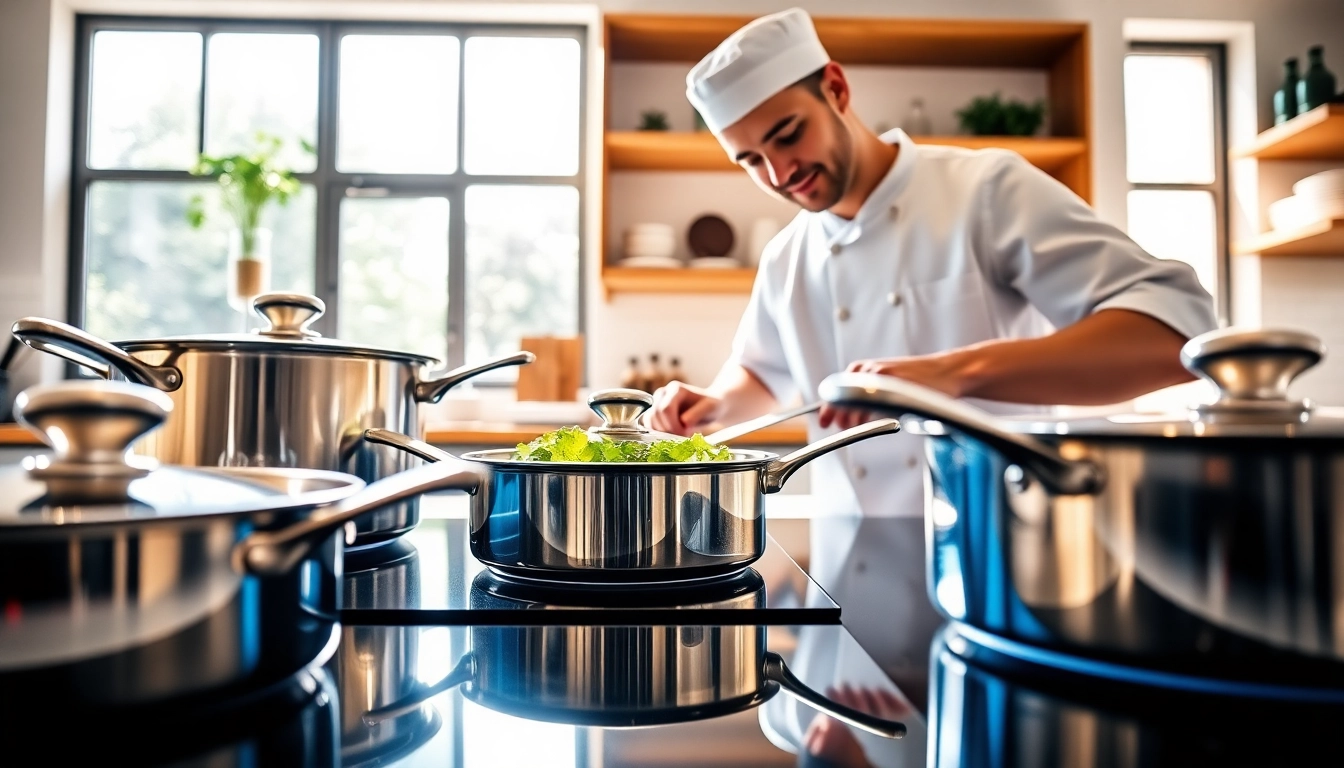
Understanding Induction Cooking
What is Induction Cooking?
Induction cooking is a modern cooking method that uses electromagnetic fields to heat cookware directly, rather than relying on a flame or electric coil. This efficient method allows for precise temperature control and faster cooking times, making it a popular choice for many households. If you’re looking to upgrade your kitchen with induction cooking capabilities, understanding how to choose the best cookware for induction NZ is crucial.
How Induction Cooktops Work
Induction cooktops utilize magnetic fields to generate heat. When a compatible cookware is placed on the cooktop, the magnetic field creates an electric current in the pot or pan, generating heat directly within the cookware itself. This means the cooktop surface remains relatively cool to the touch, enhancing safety and energy efficiency. It is essential that your cookware has a magnetic base to work effectively with induction cooktops.
Benefits of Induction Cooking
- Fast Cooking: Induction cooking is known for its quick heating capabilities, allowing food to cook faster than traditional methods.
- Energy Efficient: Since heat is generated directly in the cookware, there is less wasted heat, which translates to energy savings.
- Temperature Control: Induction cooktops provide precise temperature control, making it easier to achieve perfect cooking results.
- Safety: The surface remains cooler since heat is generated only when induction-compatible cookware is present, reducing the risk of burns.
- Easy Cleanup: Spills and splatters are less likely to burn onto the cooktop surface, making cleaning easier.
Features to Look for in the Best Cookware for Induction NZ
Material Types and Their Importance
The material of the cookware plays a significant role in its effectiveness with induction cooktops. Common materials that are compatible include:
- Stainless Steel: Known for its durability and non-reactive properties, stainless steel cookware typically works well on induction tops.
- Cast Iron: Excellent at retaining heat, cast iron is ideal for slow cooking and searing but can be heavy to handle.
- Copper: Copper cookware (with a magnetic layer) offers excellent heat conductivity. However, it’s essential to ensure it has the right base for induction.
- Enamelled Cast Iron: This combines the benefits of cast iron with a non-reactive surface, making it versatile for various cooking tasks.
Induction Compatibility: Understanding the Labels
When shopping for cookware, look for labels or symbols indicating induction compatibility. Many manufacturers will include a magnetic spiral or a "compatible with induction" label on the bottom of their pots and pans. If a magnet sticks to the bottom of the cookware, it's a good sign it can be used on an induction cooktop.
Construction Quality: Why It Matters
High-quality construction is vital when choosing cookware for induction cooking. Look for options that feature:
- Thick Bottoms: A thick base ensures even heat distribution and prevents warping.
- Riveted Handles: These provide better support compared to welded handles, ensuring durability.
- Non-Stick Coatings: If you prefer non-stick cookware, ensure that the coating is suitable for induction heat and is free from harmful chemicals.
Top Characteristics of Best Cookware for Induction NZ
Heat Distribution and Retention
A key characteristic of good cookware is excellent heat distribution and retention. Cookware that distributes heat evenly will help prevent hotspots and ensure that your food cooks uniformly. Pots and pans with a heavy bottom are often best for this.
Durability and Maintenance
Durability is essential for cookware, especially if you plan on using it frequently. Consider materials that can withstand daily use and are resistant to scratching and staining. Stainless steel and cast iron are solid choices here. Maintenance of your cookware should also be straightforward; opt for materials that can be easily washed either by hand or in the dishwasher.
Weight and Stability
Heavier cookware often provides better stability on the cooktop, preventing wobbling while cooking. If you’re frequently sautéing or stirring, consider investing in stainless steel or cast iron options that offer both weight and stability.
Best Practices for Using Induction Cookware
Prepping Your Cookware for Maximum Efficiency
Preparing your cookware properly can enhance performance. Ensure that the bottoms are clean and dry, as moisture can reduce the effectiveness of induction heating. Additionally, using materials that match the size of the induction element helps in achieving uniform heating.
Cooking Techniques to Leverage Induction
Induction cooking is slightly different than traditional cooking methods, so adjust your techniques accordingly:
- Use Lower Temperatures: Induction provides fast heat; start at lower settings to prevent burning.
- Choose Flat-Bottomed Cookware: This maximizes contact with the heating element, improving efficiency.
- Keep the Cookware Covered: Covering pots and pans can trap heat and cook food more thoroughly.
Caring for Your Induction Cookware
Caring for your induction cookware involves regular maintenance and cautious usage. Here are some tips:
- Use wooden or silicone utensils to prevent scratching non-stick surfaces.
- Avoid using abrasive cleaners; instead, opt for soft sponges and non-abrasive detergents.
- Store cookware safely to prevent damage, stacking items with care.
Frequently Asked Questions
What cookware should I avoid on induction?
Avoid cookware made of aluminum, glass, copper (unless coated with a magnetic base), and some stainless steel products, as they may not attract magnets and won't work on induction stoves.
How can I tell if my cookware is induction compatible?
You can check for induction compatibility by looking for induction-specific labels or testing with a magnet; if the magnet sticks to the bottom, the cookware is compatible.
What are the best materials for induction pans?
The best materials for induction pans include stainless steel, cast iron, and enamel-coated cookware, as they effectively heat up and maintain temperature during cooking.
Are there any non-stick options for induction cookware?
Yes, many non-stick options are available for induction cookware, often made with a stainless steel or cast iron base featuring a non-stick coating suitable for induction heating.
How do I clean and maintain induction cookware?
Clean induction cookware with warm, soapy water using non-abrasive sponges. Avoid steeping in water, especially for cast iron, to prevent rusting, and dry thoroughly before storing.